
Why Holy Week in Seville Is Special
If you can choose when to visit Sevilla, spring is the obvious choice. The weather is warm without being intense, evenings are comfortable and orange trees are in bloom across the city. It’s also when Sevilla prepares for Semana Santa, the Holy Week celebrations that take over the streets each year.
Before the processions begin, it can be helpful to get an overview of the city. A short tuk tuk tour gives you a sense of the city, which makes it easier to move around once the streets start to fill.
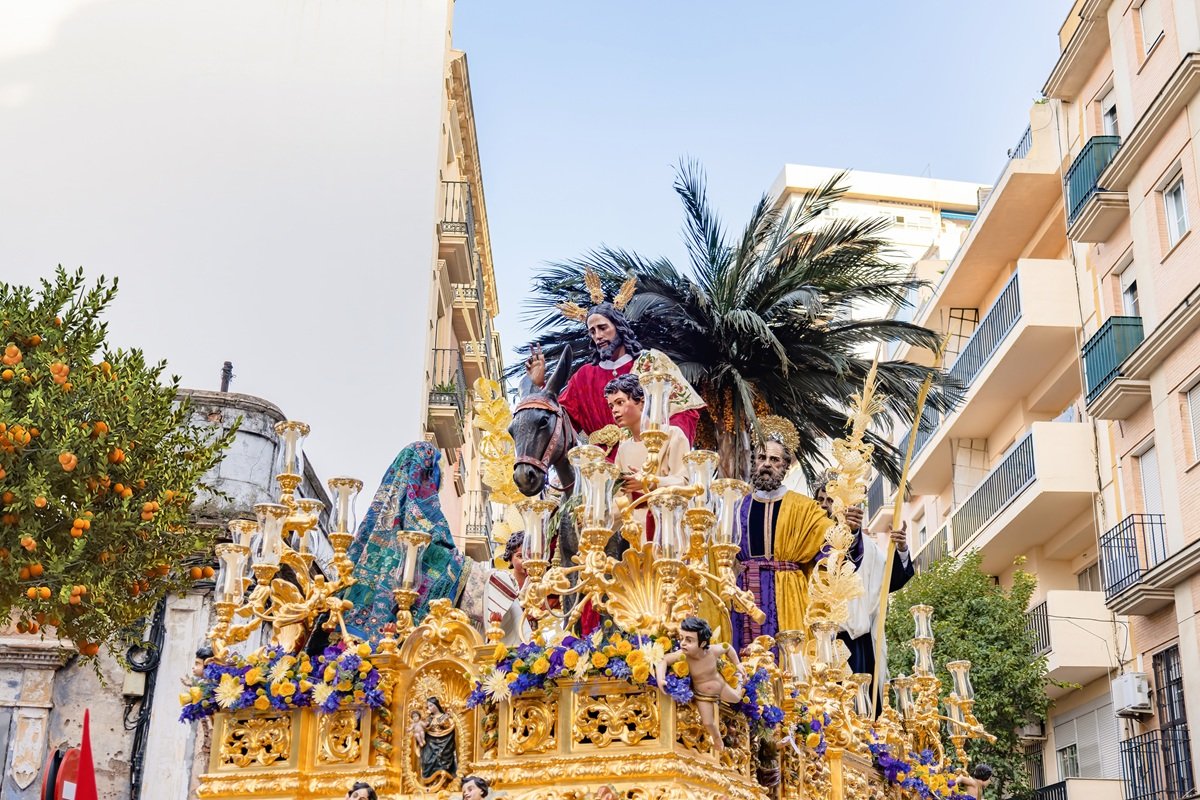
During this week, large religious processions move through the city from morning until late at night. Life-size wooden statues are carried on heavy floats, accompanied by brass bands and long lines of people in traditional robes and hoods. The atmosphere is serious and focused but also deeply communal.
At unexpected moments, a saeta may be sung from a balcony, an unaccompanied, emotional prayer directed toward the Virgin or Christ as the procession passes below.
For visitors, Semana Santa offers a rare chance to see Sevilla at its most traditional and most intense.
What Is Semana Santa?
Semana Santa is the week leading up to Easter Sunday. Throughout the week, religious brotherhoods (hermandades) organise processions that follow fixed routes through the city, many of which have remained unchanged for generations.
Each procession centres on one or two pasos, large floats depicting scenes from the Passion of Christ. These are carried by costaleros, who walk beneath the structure and guide it slowly through the streets. Their movements are deliberate and carefully coordinated.
Walking alongside the floats are nazarenos, members of the brotherhoods dressed in robes and pointed hoods, usually in silence or to the rhythm of the music. Marching bands accompany many processions, setting a solemn tone that defines the week.
When Does It Take Place?
Semana Santa falls in March or April, depending on the date of Easter. Processions begin on Palm Sunday and continue daily until Easter Sunday.
As the week progresses, the processions become longer and more crowded. The most significant moment is La Madrugá, the night from Thursday into Good Friday, when some of Sevilla’s most well-known brotherhoods take to the streets overnight.
It’s one of the busiest and most demanding moments of the week, both for participants and spectators.
Where to Watch
Good viewing spots can be found across the city, but these areas are especially popular:
- Seville Cathedral and La Campana Central points where many processions pass.
- Calle Sierpes A traditional route through the historic centre.
- Triana A neighbourhood with strong local involvement, particularly when the processions cross the river.
Be aware that streets can become very crowded, especially later in the week.
Why It’s Worth Seeing
Semana Santa is not designed for tourists, which is part of what makes it interesting. It’s a working tradition that matters deeply to the people who take part. Watching the processions offers insight into Sevilla’s history, religious life and sense of community in a way few other events do.
If you’re visiting Sevilla in spring and don’t mind crowds, Semana Santa is a meaningful and memorable way to experience the city.